What substance in a house is the dirtiest (has the most bacteria)?
The Experiment:
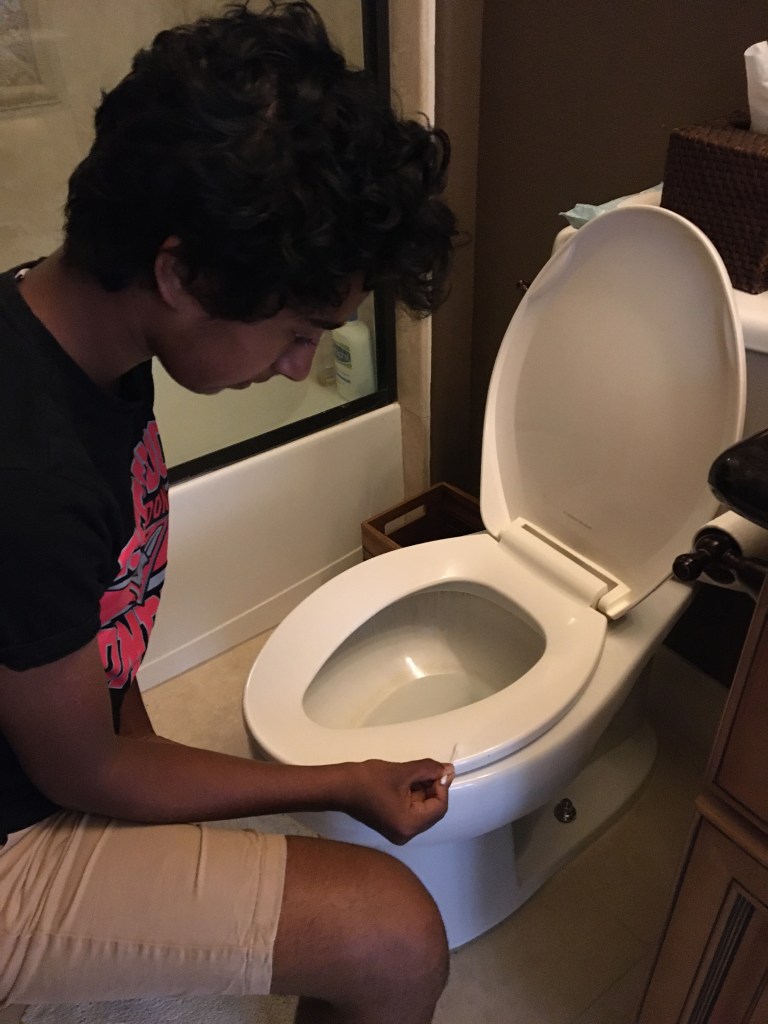
My parents advise me to use a paper towel when handling the toilet seat. That made me wonder. Why so much care with a toilet seat, but not as much with other possibly dirtier substances like door knobs or sponges? I set out to test if my parents cautiousness was necessary around the toilet seat- to see if the toilet was really the dirtiest area of the house. My hypothesis was that surfaces that were in contact with other surfaces in dirty environments would be the dirtiest rather than the toilet- surfaces such as doorknobs and sponges. First, in class, I brainstormed the objects in the house that might be the dirtiest, which was often the areas that were touched the most. The surfaces and items I came up with, and subsequently swabbed for bacteria ended up being as follows: a phone, a plate, the countertop, a computer keyboard, a sponge, a doorknob, a light switch, an uncleaned floor, a cleaned floor, and the toilet seat. After all of these surfaces were swabbed and applied to a petri dish it was time to put them in the incubator and wait for the bacteria to grow.
Problems & Solutions:
After a week I observed the petri dishes. When comparing the results there was some confusion. Firstly, there was bacteria growing in the petri dish from the surrounding air while it was being incubated. To control for this we only took into consideration the bacteria that grew along the lines we had swabbed. My mother and I, who both took swabs of the items, designated a pattern we would each swab in. Secondly, my mother and I ended up taking swabs of the items in differing ways. To account for this, when comparing I had to compare a single line of bacteria from each of two petri dishes. Therefore the different swabbing methods wouldn’t change the results. To see the individual dishes, and how the bacteria grew in each one, click the link below:
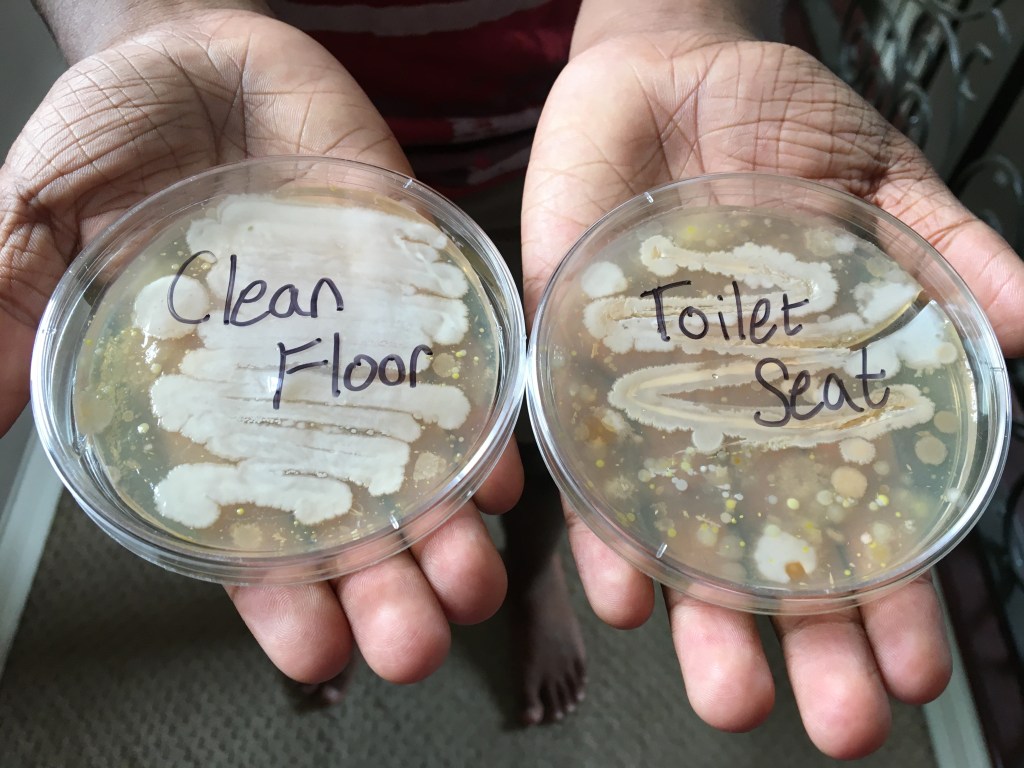
https://docs.google.com/document/d/1ibtHgXgdsqUJvC8qhy7wypgOv27yjjP3PHHOgQu3SY4/edit?usp=sharing
Results:
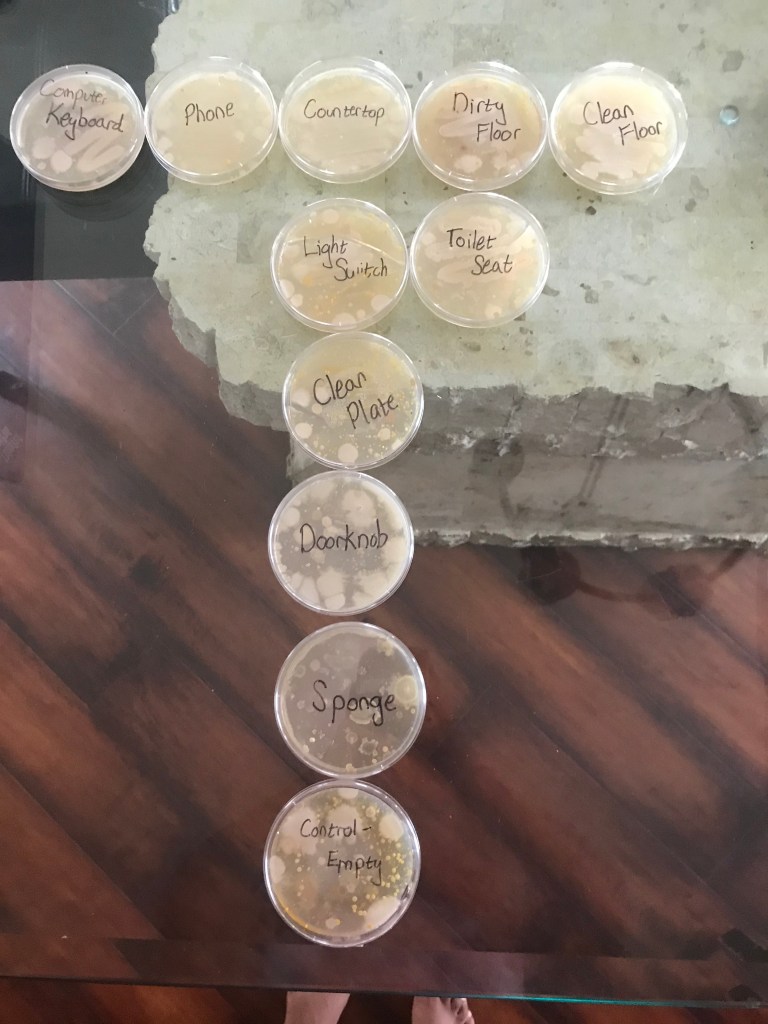
In order, the substances we tested from cleanest to dirtiest come in 6 groups. The first group consisted of the control. This was an empty petri dish that was the cleanest because it had no bacteria infested substances in contact with it. The next group consisted of the sponge. The reason the sponge was as clean as it was is most likely because it had anti-bacterial detergent on it. This would have killed any bacteria from the sponge that was trying to grow on the dish. The third group only included the door knob. This was more dirty than the sponge because it didn’t have any germ killing soap, but the reason it wasn’t more dirty is because the door handle is a dry environment. Bacteria are living things and need water to live. The dry door handle therefore didn’t support as many bacteria. The subsequent group was the clean plate. The plate had been washed, but because of it’s wet environment and residual food, it was a relatively good breeding ground for bacteria. The following group contained two items, the light switch and the toilet seat. The light switch had the same amount of hand touching it as the doorknob, but was inside the house giving it a much better environment. The toilet was a wet area that had a substantial amount of human, and fecal matter in contact with it, but the seat was often cleaned. This cleanliness meant that it wasn’t as dirty as the last group on the list. This last group comprised 5 items, Countertop, Computer Keyboard, Phone, Clean Floor, and the Dirty Floor. These had one thing in common: they all were touched hundreds of times on a day to day basis, and 3 of them (Dirty Floor, Phone, Computer Keyboard) aren’t or weren’t cleaned.
Conclusion:
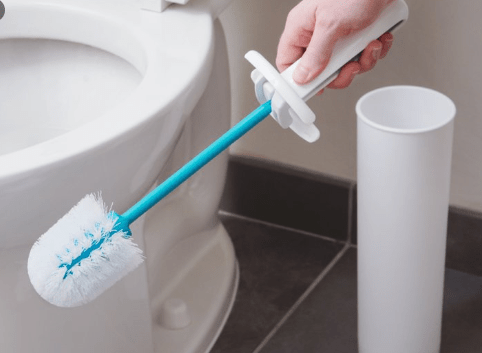
To conclude neither my parents or I was right. Toilet seats aren’t very dirty, but only because we know that they can be. Because we know that toilets can easily become overrun with bacteria we clean them. Even so the other items we think could be dirty because they are handled in dirty environments, like sponges and doorknobs, aren’t because they don’t have the right environment to sustain that bacteria. Truly it’s the items we don’t believe are dirty, which inhabit relatively clean environments, that are most likely to be dirty, like your own phone or computer keyboard. The lesson? Just be wary and safe when it comes to the dirty substances around your house. Clean your phone every once and awhile, make sure your floors are disinfected, and please, no matter what, clean your toilets. The next experiment I will be testing is the life advice my parents use, of keeping one’s batteries cold, to help them last longer.
 Proof that Parental Points Aren't Perfect