We have all heard of the 5 second rule.
The Experiment:
Once, I was eating dinner with my family. As the meal wrapped up, we began eating dessert, a bowl of cookies. My father reaches out to grab one, but accidentally spilled one out onto the floor. With speed, he snatched it from the ground as he shouted, “5 second rule!”. That made me wonder, if one were to pick up a food from off the ground within 5 seconds would it leave the bacteria no time to get on one’s food? Would waiting past 5 seconds bring exponentially more bacteria? I didn’t think so, but I had to test it.
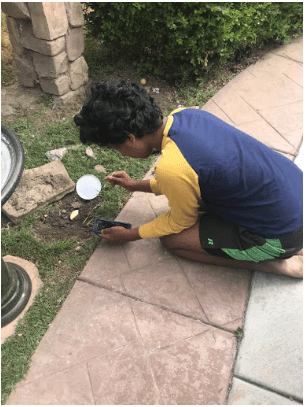
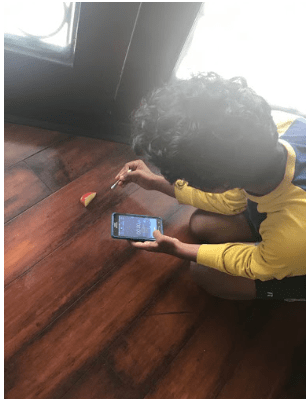
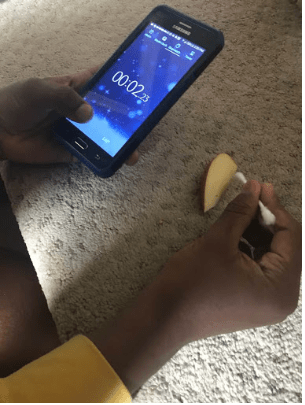
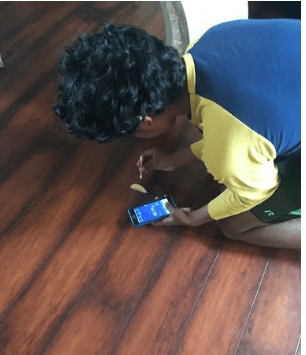
My hypothesis was that the 5 second rule is false, meaning that picking food up before 5 seconds have passed won’t help you avoid bacteria in your food. How would we go about testing this? We would need to see if a piece of food that had been dropped for 5 seconds had less or no bacteria compared to a piece of food dropped for a longer amount of time. I dropped the apples for different amounts of time and compared the bacterial growth. As a control for any existing bacteria already in the petri dish I placed a petri dish with nothing in it in the incubator. As a control for any existing bacteria already in the apple before it had been dropped, I swabbed the apple as soon as it was taken out of the container to incubate. This is the plan I made for this test, while in school. With the control set, I wanted to see if the 5 second rule had more or less of an effect in different areas, so I tested this in 4 separate locations. The first was a wood-paneled floor that had a lot of foot traffic, and hadn’t been cleaned. I labeled this “Dirty Floor”. The next was an area of wood-paneled floor that had almost no foot traffic and had been cleaned. I labeled this “Clean Floor”. Additionally I tested this outside, in an area of dirt which I labeled, “Outside”. Finally I tested this on an area of carpeted floor known as, “Carpet”. I couldn’t only drop food for 5 seconds, because the 5SR states that there won’t be bacteria during 5 seconds, which means that after 5 seconds one can’t eat food off the floor. To test for this I dropped apples on each surface for 5 seconds and for 20 seconds. After all 4 surfaces were completely tested it was time to put them in the incubator and wait for the bacteria to grow.
Results:
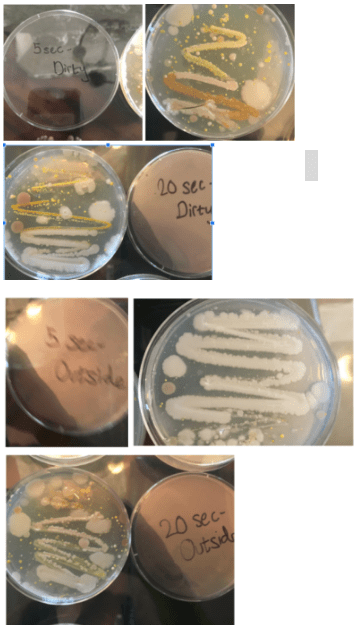
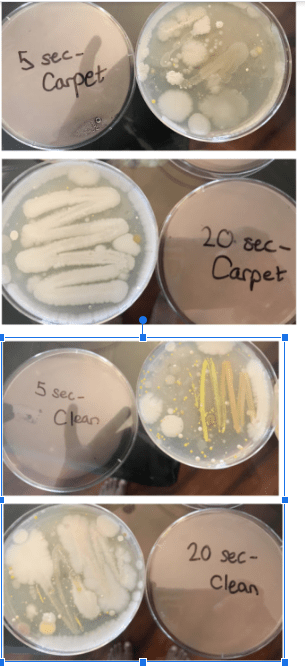
With the bacteria grown it was time to compare them to the control. If the 5 second rule was true two conditions must be met. First, the control and the 5 second dish must have roughly the same amount of bacteria. This would prove that almost no bacteria was on the food before it was dropped. Secondly, the 20 second dish must have more bacteria than the 5 second dish. This would prove that waiting long after 5 seconds would result in significantly more bacteria growth. With this link you can see the pictures of the bacteria growth and the conclusions I reached for each surface that was tested. https://docs.google.com/document/d/1uV0coL-jraQwHsE9dJqL6Tt45wjy3Ogfh2elaSEiTOg/edit?usp=sharing
Conclusion:
With two surfaces leading to a positive conclusion and two surfaces leading to a negative conclusion about the 5 second rule, where do we stand? In all of the petri dishes including the control, there were significant amounts of bacteria, and some surfaces like the clean floor, and dirty floor grew more variety in species of bacteria indicated by color and shape. Clearly no matter how hard we try we can’t avoid bacteria. Whether we drop food or not, it will be covered in all sorts of bacteria. However, historically many people have eaten apples, and eaten them off the ground, and the majority of them have not been harmed by the bacteria that we know is on them. With the information I have gathered two conclusions can be made. Because of the ever presence of bacteria, the 5 second rule is likely untrue, making my hypothesis correct. More importantly, it doesn’t matter. As long as you exercise caution, and wash your food if it leaves your table, you will be fine. Next month I will test which substance in my house is really the dirtiest.
 Proof that Parental Points Aren't Perfect