The Agar:
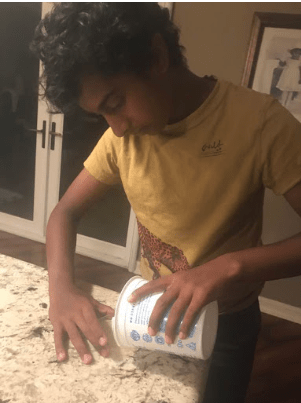
We bought a petri dish set for these exact types of experiments. The box contained 20 petri dishes, sterile cotton swabs, and agar solution. Agar is a jello-like nutrient mixture that bacteria easily grow on. This agar was dehydrated in the package so we had to mix it with distilled water. The reason we couldn’t use plain tap water is that tap water would have bacteria: not harmful bacteria, but bacteria that would undermine the results of the experiment. We then separated the mixture into two to make it easier to boil. The reason we boiled it was to kill any existing bacteria that was already in the petri dish or the agar, as well as make the agar dissolve better in the solution. We boiled the mixture in the microwave, but we had issues with overheating it. For the second mixture, as we were waiting for it to heat up, with no warning it suddenly started expanding, and the agar solution almost spilled all over the microwave. Next we allowed the agar to cool, and poured it into the 20 petri dishes we had. We then let these cool and harden overnight.

The Incubator:
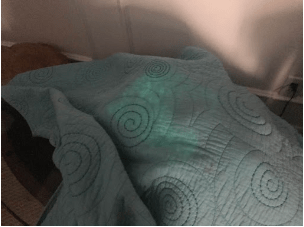
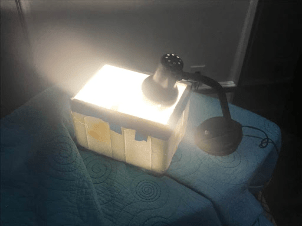
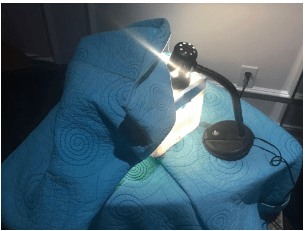
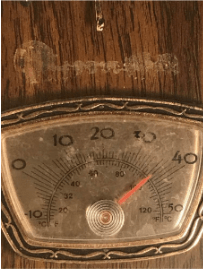
Agar isn’t enough to get bacteria growing to levels large enough to see with the naked eye. I needed to get the petri dishes to a temperature that the bacteria would thrive in. Bacteria typically thrive in temperatures similar to that of the human body: 37 degrees C. I needed an incubator that would keep the bacteria at that exact temperature. At school, I researched the construction and upkeep of a DIY incubator. To make the incubator I used the heat of an incandescent lamp, and trapped that heat in a styrofoam cooler wrapped in a blanket. We originally wanted to use 3 lamps, but the first two we tried were LED, and therefore only emitted light, not heat. We experimented with different configurations of the blanket, lamp, and cooler to get the precise temperature we wanted. We first tried simply the lamp and the cooler, only reaching 30 degrees Celsius. Then we fully wrapped the blanket around the cooler, getting the inside of the cooler to 45 degrees. Finally we partially laid the blanket around the cooler, leaving half of the top exposed. This configuration finally got us around the temperature we wanted 37 degrees. With these two elements in place, in the coming months I will test, the 5 second rule, and other experiment involving growing bacteria
 Proof that Parental Points Aren't Perfect